
If your car is shaking while driving, it can make even a short trip uncomfortable. More importantly, vibrations may indicate a problem with your tires, wheels, brakes, suspension, or other vehicle components.
Sometimes, the cause is relatively simple. However, other problems can affect your vehicle’s handling and safety. Therefore, it’s important to have persistent or severe vibrations inspected rather than ignoring them.
At Megasell Motors Service Centre in Edmonton, our experienced technicians can inspect your vehicle and determine what’s causing the vibration. Here are seven common reasons your car may shake while driving.
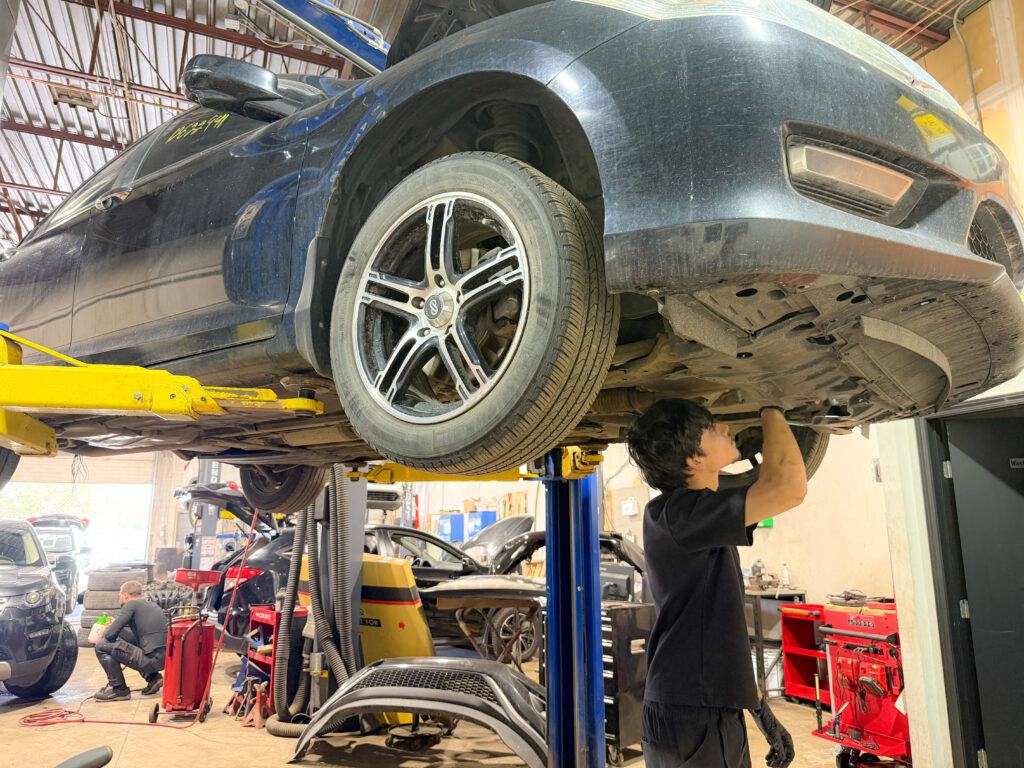
Why Is My Car Shaking While Driving?
The cause often depends on when and where you feel the vibration. For example, shaking at highway speeds may point to a different problem than vibration while braking.
Additionally, you may feel the shaking through the steering wheel, brake pedal, seat, or entire vehicle. These details can help technicians identify the source of the problem.
Let’s look at seven common causes.
1. Tires Are Out of Balance
Unbalanced tires are a common cause of vibration, especially at higher speeds. When the weight isn’t distributed evenly around the wheel and tire assembly, you may notice shaking through the steering wheel.
For example, the vibration may become more noticeable between certain speeds.
Fortunately, wheel balancing can often correct this problem. However, technicians should also inspect the tires for damage or uneven wear.
2. Your Vehicle Needs a Wheel Alignment
Poor wheel alignment can affect how your vehicle handles and how evenly your tires wear.
You may notice:
- Vehicle pulling to one side
- Uneven tire wear
- Crooked steering wheel
- Changes in handling
- Steering-related vibration
If you notice these symptoms, consider scheduling a wheel alignment in Edmonton.
Furthermore, correcting alignment problems early can help protect your tires from unnecessary wear.
3. Worn or Damaged Tires
Your tires are the only part of your vehicle that constantly contacts the road. Therefore, their condition has a major impact on ride quality.
Uneven tread wear, damaged tires, flat spots, or other tire problems can cause noticeable vibration.
In addition, Edmonton’s potholes and changing road conditions can be hard on tires and wheels. As a result, it’s a good idea to inspect your tires if the shaking begins after hitting a pothole or road hazard.
4. Brake Problems
Does your vehicle shake mainly when you press the brake pedal? If so, the braking system may need attention.
For example, problems with brake rotors or other braking components can create vibration during braking. You may feel it through the steering wheel or brake pedal.
However, brake problems shouldn’t be diagnosed based on vibration alone. A proper brake inspection can identify the cause and determine which repairs are necessary.
5. Suspension Problems
Your suspension system helps keep your vehicle stable and your tires properly connected to the road.
Over time, components such as shocks, struts, bushings, ball joints, or other suspension parts can wear. Consequently, you may notice vibration, unusual noises, poor handling, or excessive movement over bumps.
Additionally, suspension problems may contribute to uneven tire wear.
Therefore, if your vehicle feels unstable or starts shaking on rough roads, schedule an inspection.
6. Wheel or Rim Damage
A bent or damaged wheel can also cause your car to shake while driving.
This problem may occur after:
- Hitting a pothole
- Driving over a curb
- Striking road debris
- Experiencing an impact
- Driving with damaged tires
Unfortunately, even minor wheel damage can sometimes create noticeable vibration at higher speeds.
For this reason, technicians may inspect both the tires and wheels when diagnosing a vibration problem.
7. Engine or Drivetrain Problems
Not every vibration comes from the wheels or suspension. In some cases, the engine or drivetrain may be responsible.
For example, an engine that isn’t running smoothly may cause vibration while the vehicle is stopped or moving. You may also notice rough idling, reduced power, unusual noises, or a check engine light.
In that case, professional engine diagnostics can help identify the underlying problem.
Why Does My Car Shake at Highway Speeds?
If your vehicle drives smoothly at lower speeds but starts shaking on the highway, the tires and wheels are good places to begin the inspection.
For example, tire imbalance, damaged tires, or wheel problems may become more noticeable as speed increases.
However, suspension and steering components can also contribute to highway vibration. Therefore, a complete inspection may be necessary if balancing the tires doesn’t solve the problem.
Why Does My Car Shake When Braking?
Vibration that occurs mainly during braking can indicate a problem within the braking system.
For instance, you may feel pulsation through the brake pedal or shaking through the steering wheel.
Because your brakes are essential for safe driving, don’t ignore new or worsening vibration while braking. Instead, schedule a professional brake repair inspection in Edmonton.
Why Does My Steering Wheel Shake?
A shaking steering wheel can point toward several problems.
Common causes include:
- Tire imbalance
- Wheel damage
- Alignment problems
- Steering components
- Suspension problems
- Brake-related issues
Most importantly, pay attention to when the vibration occurs. This information can help your technician narrow down the possible causes.
Can Edmonton Potholes Cause Vehicle Shaking?
Yes. Edmonton road conditions can sometimes contribute to tire, wheel, alignment, and suspension problems.
For example, hitting a deep pothole can damage a tire or wheel. Additionally, a strong impact can affect your vehicle’s alignment or suspension components.
As a result, you may notice pulling, steering changes, uneven tire wear, or new vibrations afterward.
If the shaking begins shortly after hitting a pothole, consider having the vehicle inspected.
Is It Safe to Drive When Your Car Is Shaking?
It depends on the cause and severity of the vibration.
A minor vibration may not indicate an immediate emergency. Nevertheless, persistent shaking shouldn’t be ignored because the problem may worsen over time.
More importantly, stop driving and seek professional assistance if the vibration is severe or accompanied by significant steering problems, braking issues, unusual noises, warning lights, or loss of control.
How Can You Prevent Vehicle Vibrations?
Regular maintenance can help prevent some of the most common causes of vehicle shaking.
For example:
- Check tire pressure regularly
- Rotate your tires as recommended
- Inspect tires for uneven wear
- Balance your wheels when necessary
- Maintain proper wheel alignment
- Have your brakes inspected regularly
- Address suspension problems early
- Don’t ignore new noises or vibrations
In addition, have your vehicle inspected after a significant pothole impact if you notice changes in handling.
Why Choose Megasell Motors Service Centre?
If your car is shaking while driving in Edmonton, Megasell Motors Service Centre can help identify the cause.
Our customers can expect:
- Experienced automotive technicians
- Professional vehicle inspections
- Wheel alignment services
- Brake inspections and repairs
- Engine diagnostics
- Suspension and steering inspections
- Honest repair recommendations
- Competitive pricing
- Service for most makes and models
Above all, we focus on identifying the source of the vibration before recommending repairs. As a result, you can make an informed decision about your vehicle.
Frequently Asked Questions
Why does my car shake at 80–100 km/h?
Vibration at higher speeds may be related to tire balance, tire damage, wheels, or suspension components. However, an inspection is necessary to determine the exact cause.
Why does my car shake when I brake?
Brake-related vibration may indicate a problem with the rotors or another braking component. Therefore, have your braking system inspected if the shaking repeatedly occurs while braking.
Can bad wheel alignment make my car shake?
Alignment problems can affect handling and tire wear. However, tire imbalance, wheel damage, or suspension problems may also cause vibration. A professional inspection can help distinguish between them.
Why does my car shake while idling?
If the vehicle shakes while stopped, the problem may be related to the engine rather than the tires or wheels. For example, ignition or other engine-related issues can cause rough operation.
Should I keep driving if my steering wheel shakes?
Don’t ignore persistent steering wheel vibration. If the shaking becomes severe or affects your ability to control the vehicle, stop driving and have the vehicle inspected.
Book a Vehicle Inspection in Edmonton
If your car is shaking while driving, don’t wait for the vibration to become worse. Instead, have the vehicle inspected to identify the cause.
Megasell Motors Service Centre provides professional automotive inspections, diagnostics, brake repairs, wheel alignments, and other vehicle services in Edmonton.
Book your appointment today and let our technicians help get your vehicle driving smoothly again.
